![[the absence of which]](https://substackcdn.com/image/fetch/$s_!vIFO!,w_120,h_120,c_fill,f_webp,q_auto:good,fl_progressive:steep/https%3A%2F%2Fsubstack-post-media.s3.amazonaws.com%2Fpublic%2Fimages%2F35c98d2c-fa19-4b0b-8d44-36983bf8d51a_1080x1080.png)
![[the absence of which]](https://substackcdn.com/image/fetch/$s_!_nFz!,e_trim:10:white/e_trim:10:transparent/h_72,c_limit,f_auto,q_auto:good,fl_progressive:steep/https%3A%2F%2Fsubstack-post-media.s3.amazonaws.com%2Fpublic%2Fimages%2Fd6465973-9bf9-4586-a91a-5a6efe2ff0b2_1080x565.jpeg)
Notes on nostalgia
Luis Camnitzer’s "Uruguayan Torture Series"; Grafton Tanner's "foreverism"; condoms; OnlyFans; authorship; Mahler dolls.
“Partial authorships” in the present
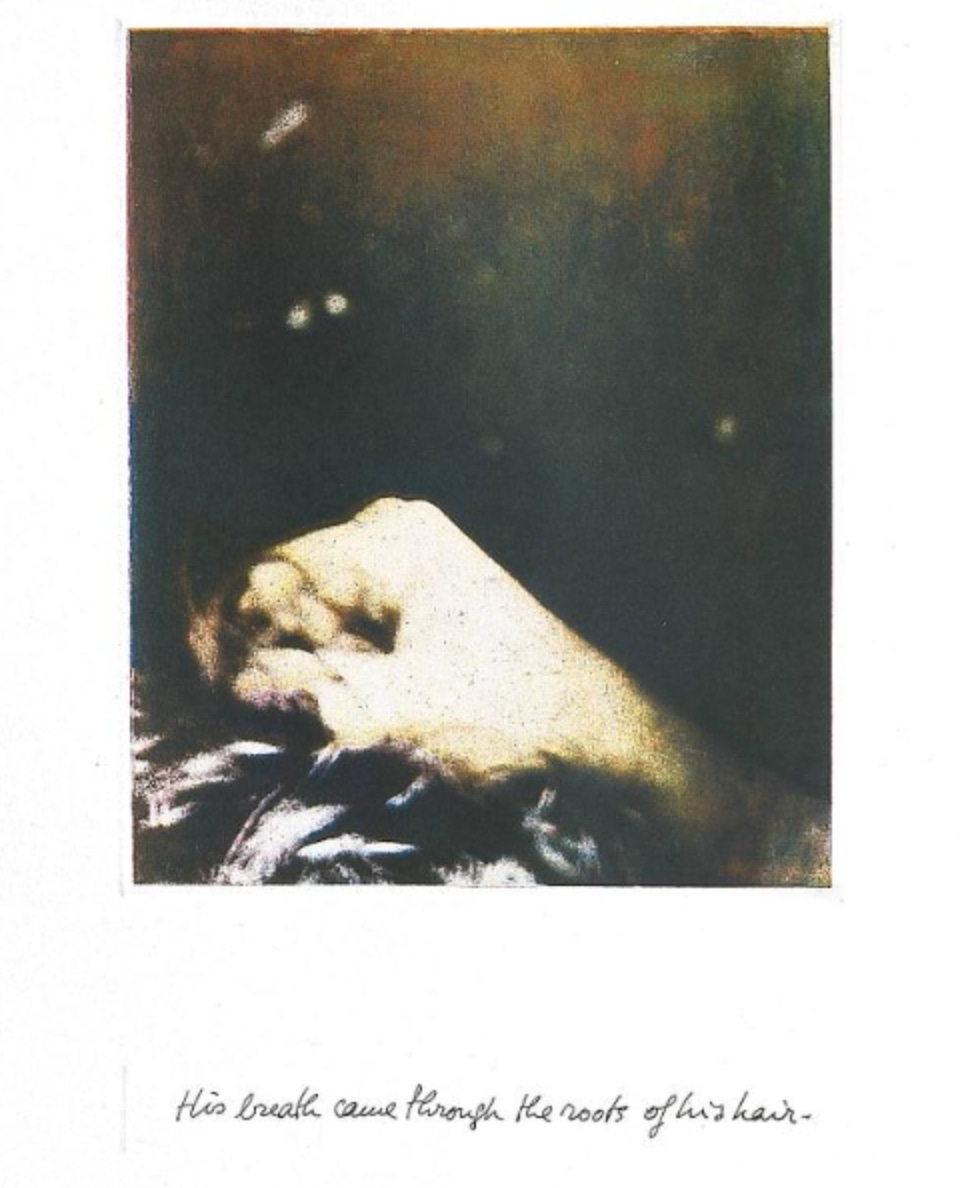
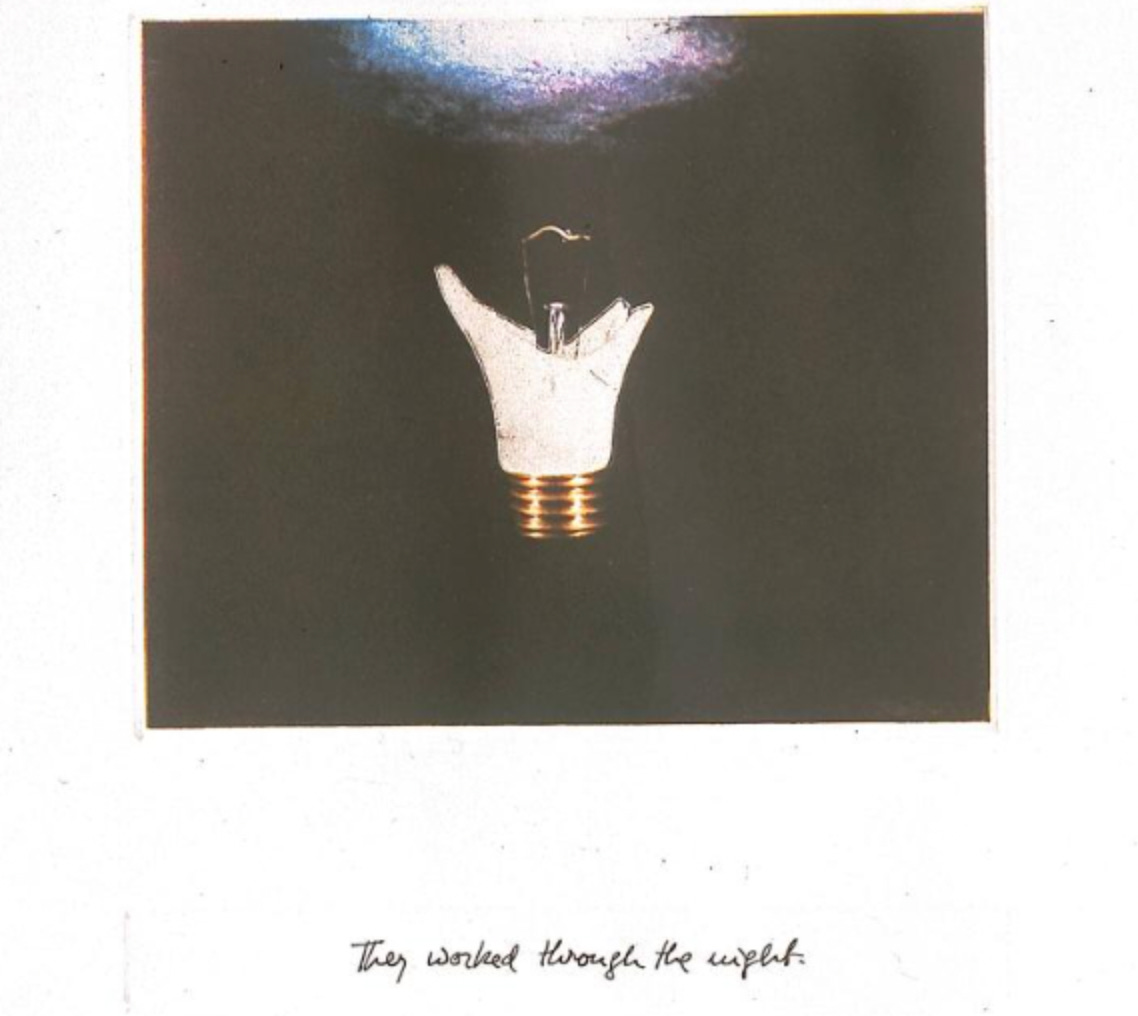
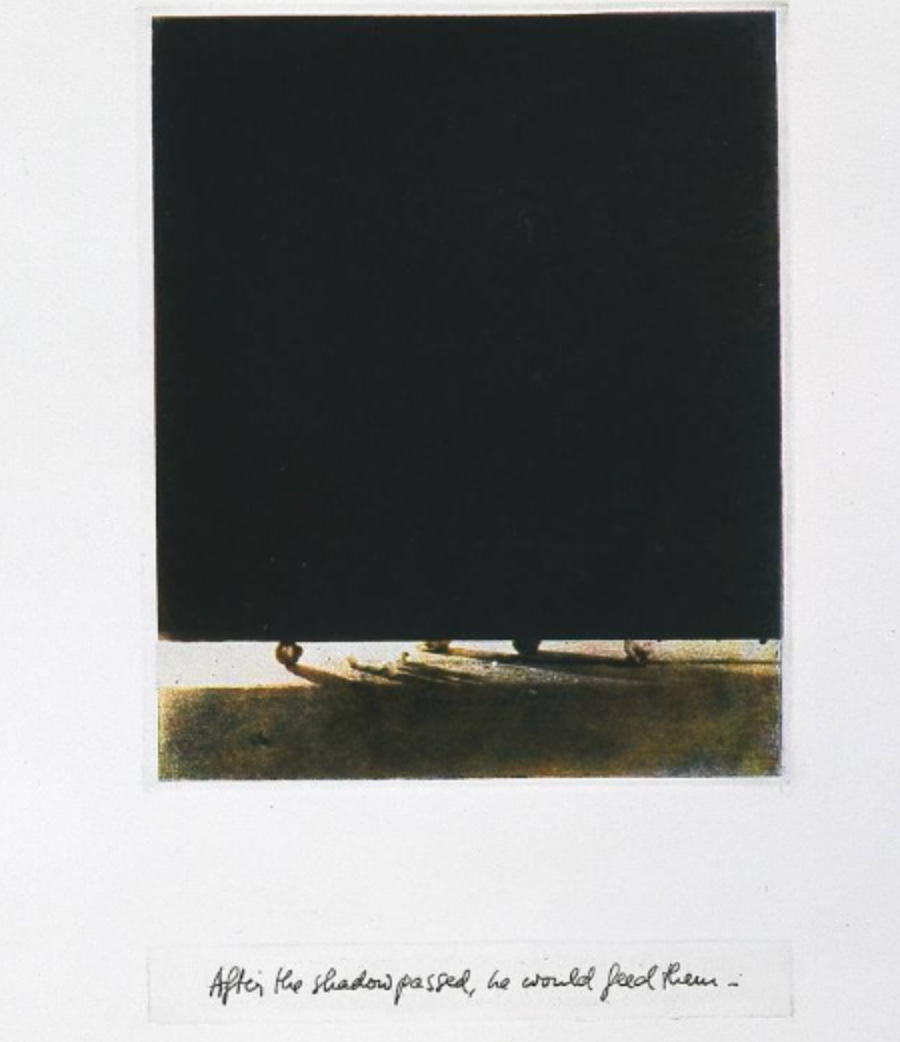
The thirty-five prints in Luis Camnitzer’s Uruguayan Torture Series allude to the torture of civilians under the dictatorship that ruled Uruguay from 1973 to 1985.1 Although Camnitzer based his prints on extensive research and interviews, he intentionally avoided graphic and documentary depictions, choosing instead to involve the viewer in imagining the events that linked the text and the image.
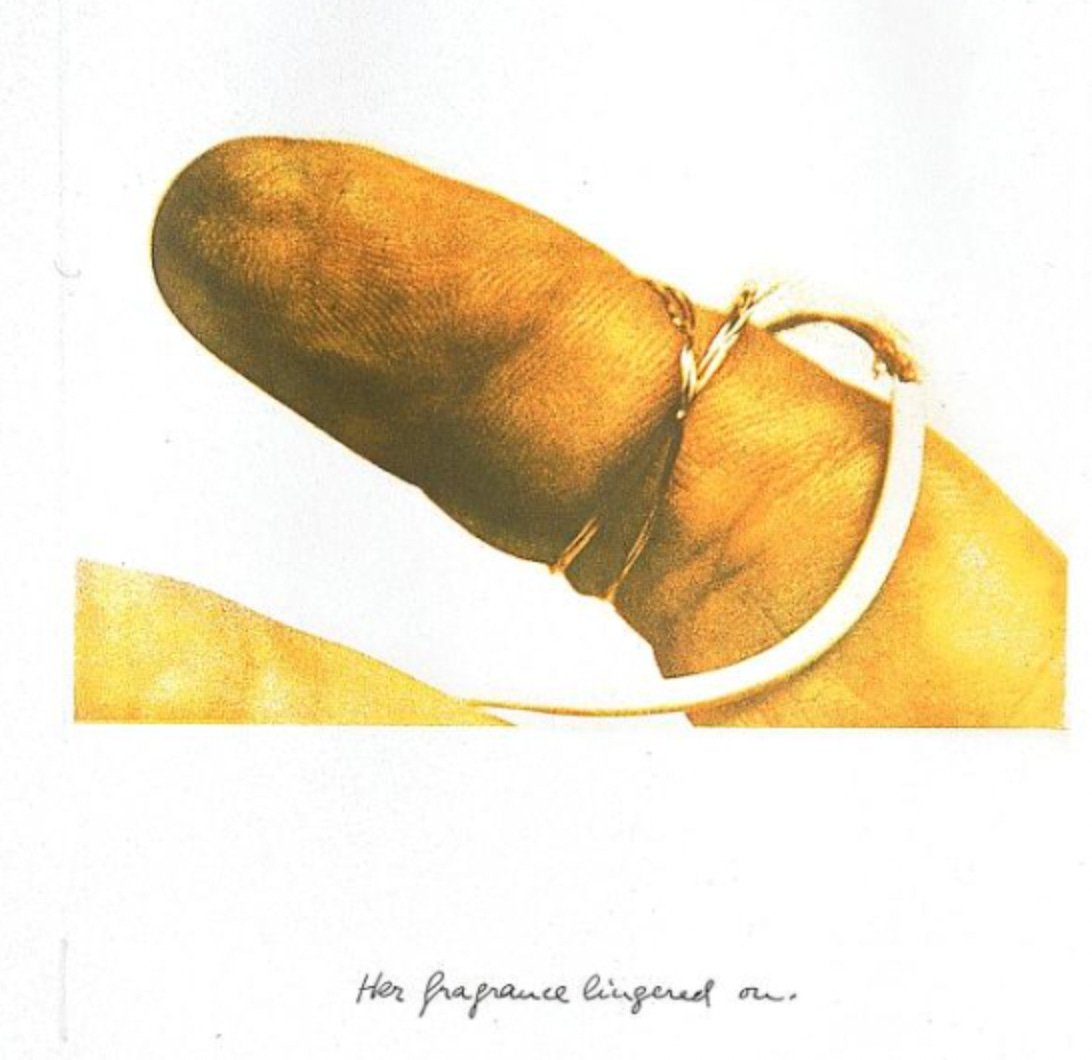
By laying unremarkable phrases next to simple photographs, Camnizter asks the viewer to join him in narrating the tortures and assuming “partial authorship” that may prompt what he calls “a perceptual and political awakening.” Perception, of course, is political.
But who is the author of our nostalgias?
During one of the World Wars, US Army physicians observed that one of symptoms of nostalgia was a disregard for cleanliness and a lack of personal hygiene. The cure for nostalgia is military neatness.
L. W. Kline assured his fellow psychologists that educated travelers were too intellectual and self-reflective to be affected by nostalgic emotions. The cure for homesickness is more education.
An 1864 paper by the Assistant Surgeon of the US Army found that men from rural areas were more vulnerable to nostalgia. Soldiers raised in large cities were more mature, as demonstrated in their nonchalance about what they ate and their absence of personal relationships to food sources and gardens. The cure for homesickness is urbanity and globalization: a McDonald’s in every metropolis.
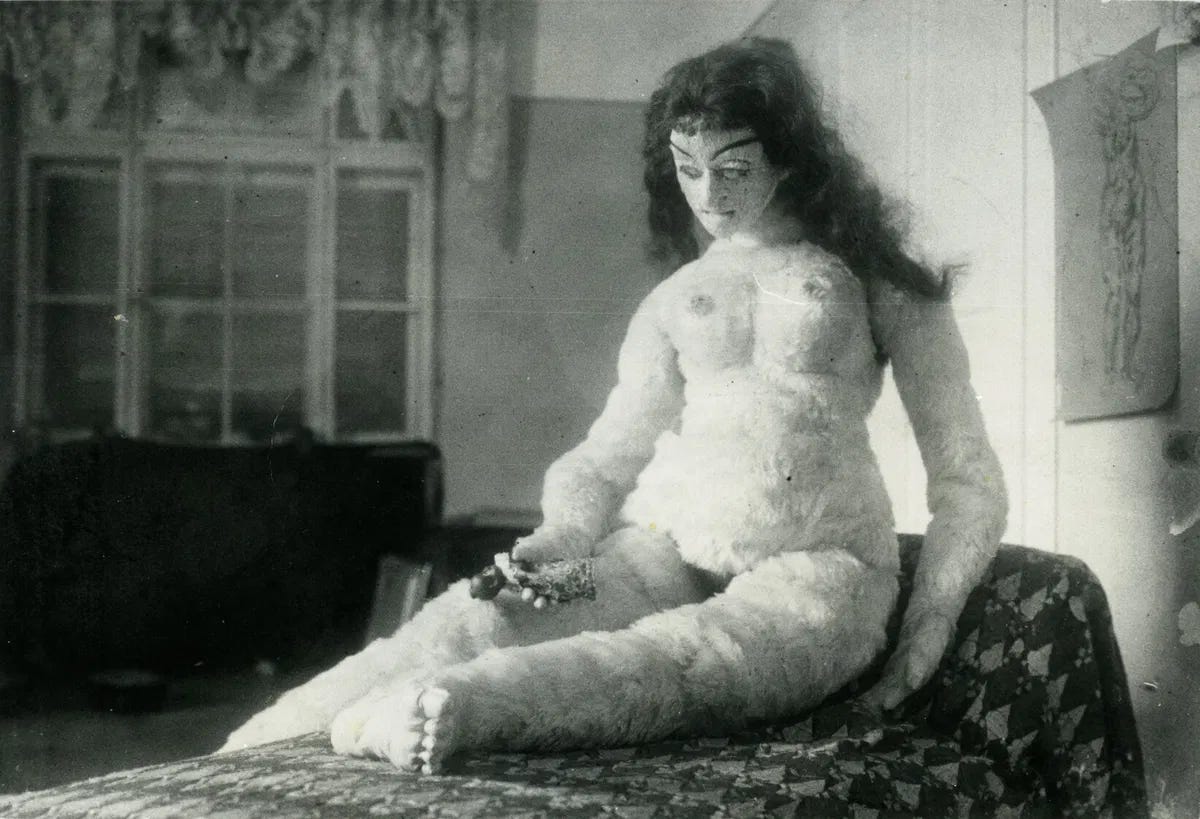
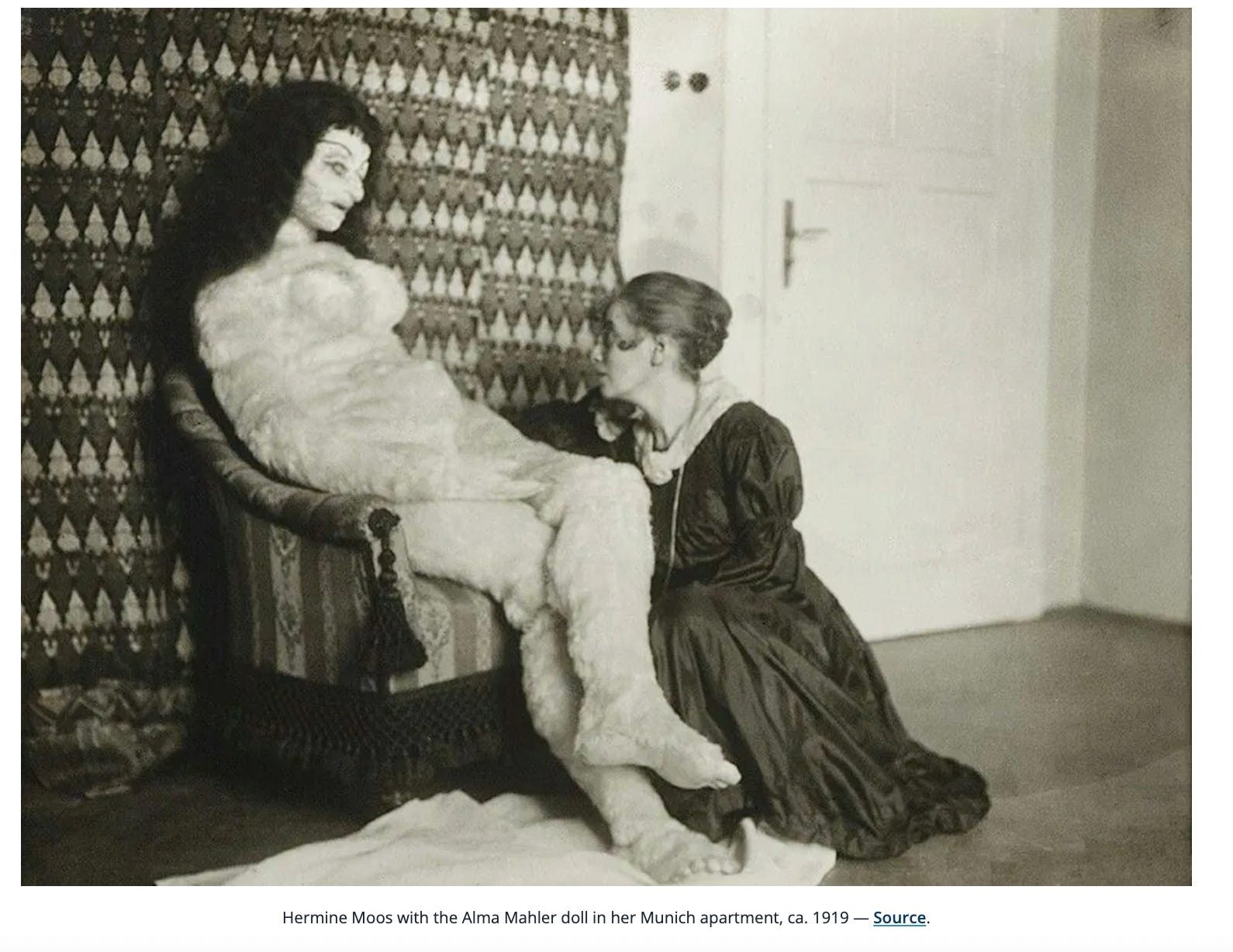
Positivists found that nostalgia strikes nonconformists and poets who failed to identify with Progressive masculinity, or the notion of man’s forward progress inherited from the Enlightenment. The cure for nostalgia is a doll made by Oskar Kokoschka.2

“Literature alters the frames of possible reference.”
I repeat this to students so frequently that it reeks of a platitude. So I offer an example, noting how Don DeLillo’s novels altered the way I thought about American history. Where “US History” sold itself as the history of a people and polity, I began seeing it as the history of a brand, namely, “the USA”. In the present Trump era, I tend to see national history as a brand for the history itself, so “US History” sells us the brand known as “US History” — and all the rest is a void. An abyss waiting to be populated by content. To keep nostalgia from ruining your life, one must form intimate relationships with global citizens and invest in transactional tits-for-tat as modeled by OnlyFans.3
Enlightened men are more likely to pump iron and own bitcoin stocks. Positivists and tech-bros are more likely to support the genocide of Palestinians. The possibility of greening the desert commits itself to banishing all nostalgia for the actual land as shepherded by its inhabitants for centuries. “We obviously don’t think nostalgia can cause a person to commit murder anymore, or advertising firms wouldn’t encourage companies to use nostalgia in their marketing,” writes Grafton Tanner. “The truth is, there actually isn’t much of a difference between the words of the positivists and Fabrik Brands. In fact, they’re both trying to accomplish the same thing: the eradication of longing.”4
Close-up of “condom”
I have never understood why condoms are also called “preservatives.” What, prithee, does the condom preserve? When prying the prefix apart from the word, one is left with a different thought— “pre-serve” — appropriate to tennis or a particular temporality prior to the serving, I no longer understand what we mean when using the verb preserve or referring to the process known as preservation.
Condoms are nostalgic to me. Like quilts and incense and talismans.
Obviously condoms “preserve” the sperm in a little balloon that conspires to civilization. The civilizing effect of the condom may be why this latex vessel is simultaneously known as a prophylactic and a preservative?
Enlightened regimes
We might be inclined to see the history of nostalgia as “a palatable progress narrative.” Once physicians decided that nostalgia didn’t cause humans to commit crimes, nostalgia became “a commodity flashing across screens, something anyone can feel and consume,” in Grafton Tanner’s telling.5 And we soothed ourselves with “this fable because it served as a metric by which we measured scientific advancement and medical enlightenment, evidence of our victory over other ‘outdated’ conditions (vapors, hysteria) that, in hindsight, were human emotions pathologized and subjected to a disciplinary regime.”6
Weighted blankets are helpful for neurodiverse persons as well as those diagnosed with clinical anxiety. Weighted blankets may help take the edge off homesickness. Survivors of rape and sexual abuse have compared weighted blankets to the sensory experience of having a large, powerful person pin you to an inescapable place. Feeling overpowered and immobilized corresponds to feelings of love and protection for some persons while eliciting terror and aphasia in others. Efforts to classify the position often ignore these variations of experience among human beings. Does nostalgia for particular weighted blankets resemble nostalgia for people and places?
Looksmaxxing is being picked up as a brand of bra-burning or feminist performance.7 Keeping up with the Jones’ now includes keeping up with the fashion on pore-size and ‘glassy skin.’ Tanner says the enormous success of George Lucas’s 1973 film American Graffiti led the marketing world to start “paying attention to nostalgia.”
To quote again:
In 1975, professor of marketing Donald W. Hendon wrote an op-ed in Marketing News arguing that the product life cycle - in which a product is introduced into the marketplace, grows, matures, saturates the market, and then declines — should be updated to account for a new trend, where product sales increase after they decline. He called this the “nostalgia tail” and attributed its development partly to the popularity of Broadway musicals like Grease, television programs like Happy Days, “and the Bicentennial market boom.” Nostalgia wasn’t a passing fad, Hendon claimed, and the marketing world needed to take it seriously.
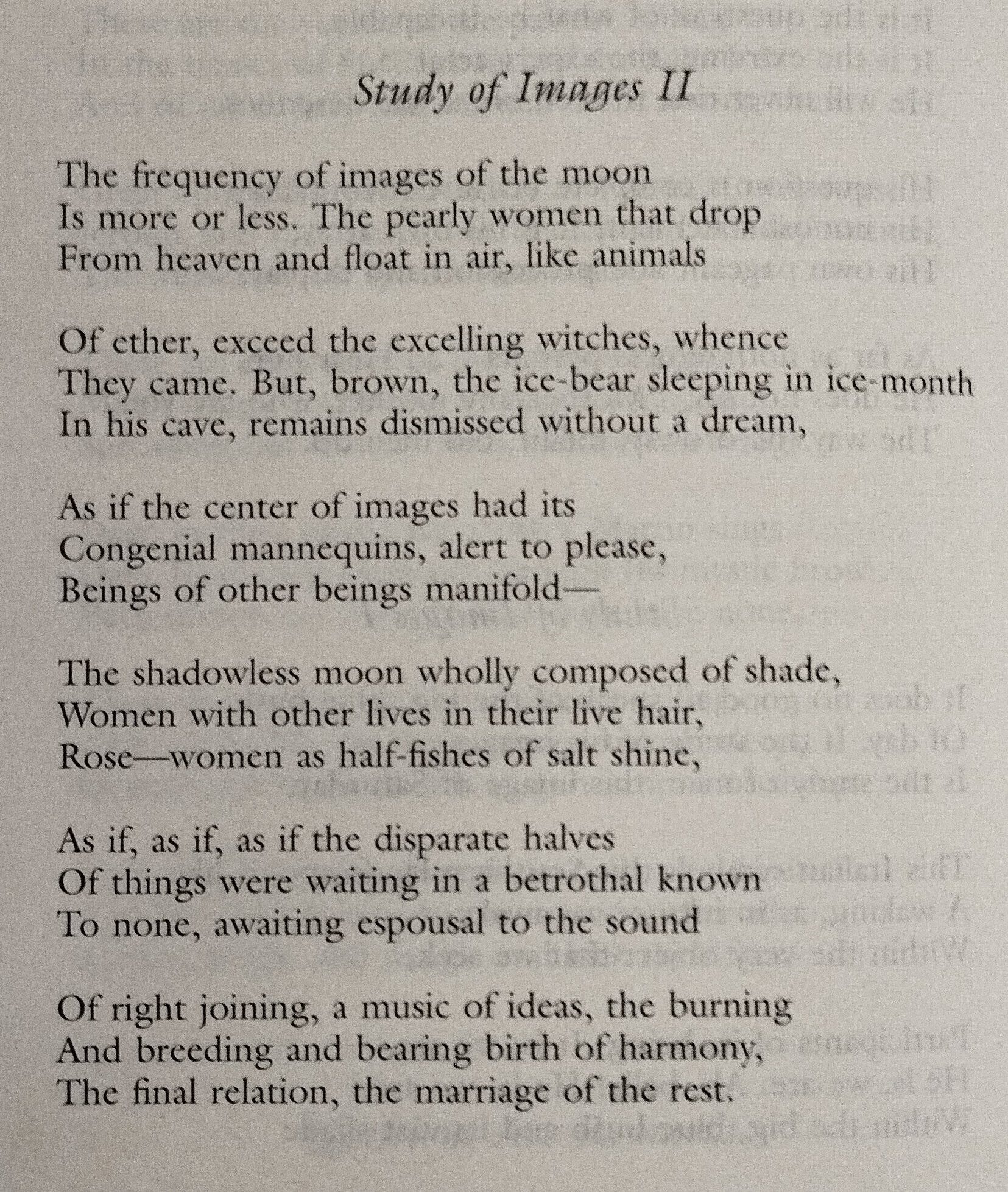
In the interest of poetry, I need to detach my brain from the exhausting emptiness of the commercialized present. Longing is what poetry does. Longing finds a loose solace in the “frequency of images of the moon,” that source of nostalgia that humans still cannot quite fix in their discourse. I love whatever it is about the moon that continues to escape us.
All images and materials related to Louis Caminzter’s Uruguayan Torture Series are sourced from the Blanton Museum of Art in Texas.
According to the Erotic Beauties website, the “five best high-paying webcam model sites to work for” are Chaturbate, CamSoda, LiveJasmin, StripChat, and BongaCams. No explanation is given, however, for why these sites overwhelmingly brand themselves as portmanteau words.
Grafton Tanner, Foreverism. Polity Books: Boston, 2024. I borrowed several examples from the rich social history of mediated culture provided by Tanner.
But nostalgia does cause people to commit crimes— even in the less visible key of slander, defacement, etc?
Grafton Tanner again: “Whereas positivist discourses targeted nostalgia as a disease to be cured, corporations eventually framed it as a consumable product, and advertisers would eventually discover just how lucrative nostalgia can be as a commodity — because consumers can theoretically satisfy their longing for the past through consumption. By framing the past as worth longing for, corporate capitalism could promise a return to the past through its products. It was a new twist on a tried-and-true capitalist formula: the marketing of a solution to a problem artificially amplified.”
“Less than a hundred years after Bresowsky, Kretschmer, and Conklin linked nostalgia with criminality, Fabrik Brands, an ad agency out of London, compiled a list of tips for companies to conduct successful nostalgia marketing campaigns,” writes Grafton Tanner. The first tip is to “know your inspiration.”
Mahmoud Darwish is the lyrical counterpoint to everything I disparage in this effort to eradicate longing in
order to sell immediacy.
Commercial nostalgia is so comfortable. It comes ready-made. It already knows what you’re supposed to feel. That’s why I’m interested in writing that does not restore an idealized time. It does not want to “go back.” It wants to understand a mark left on the body... the kind that does not try to fill the space, but instead observes it. (This is the opposite of the eradication of desire.)
I also think about how, today, even vulnerability has become an aesthetic. Longing has become Instagram language. And the question that arises in my mind is: when we write about absence, are we working through the lack, or performing an image of lack?
Note: I loved the poem you mentioned. It led me to “A Máquina do Mundo” by Carlos Drummond de Andrade. In it, nostalgia is not for the past, but for meaning.